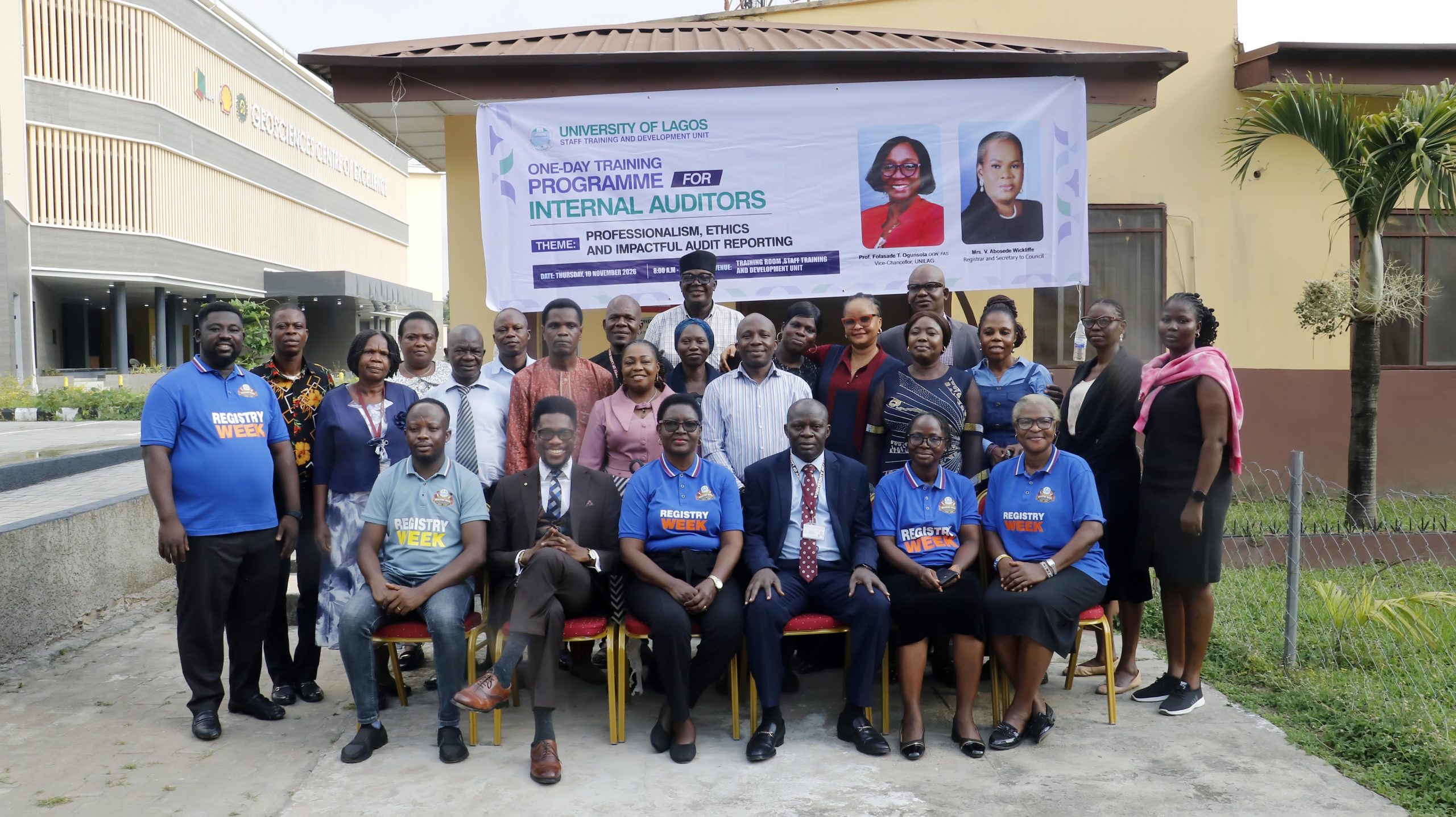
The University of Lagos (UNILAG) has intensified efforts to strengthen institutional accountability, financial transparency and risk management through a professional capacity building workshop for its internal auditors.
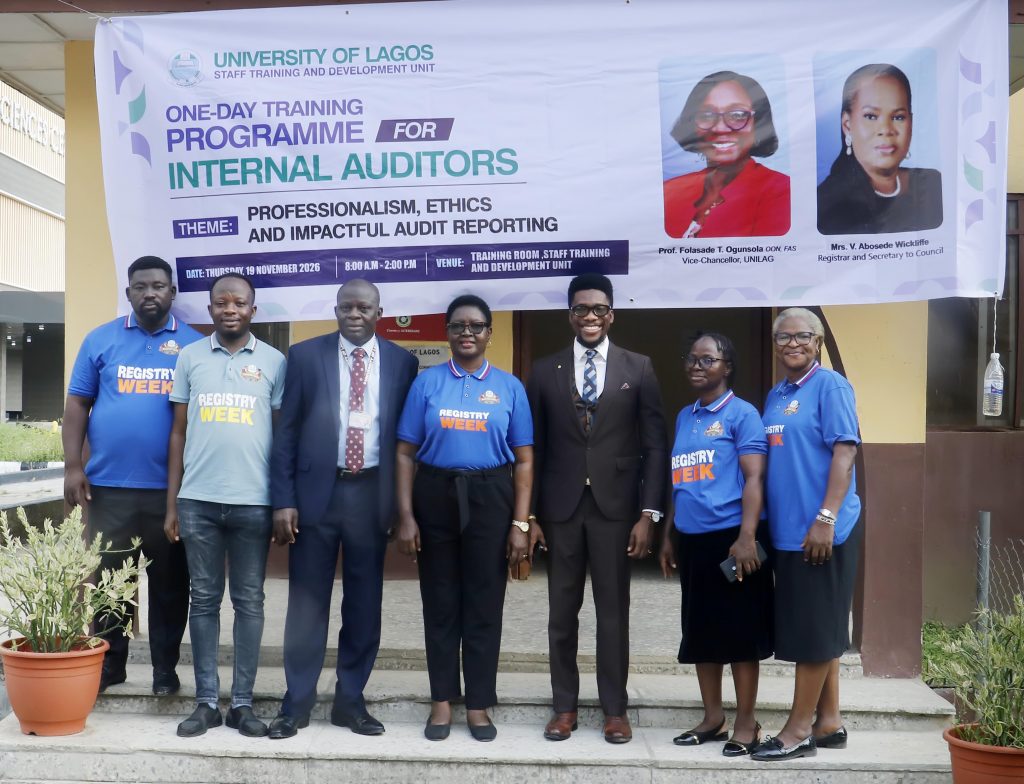
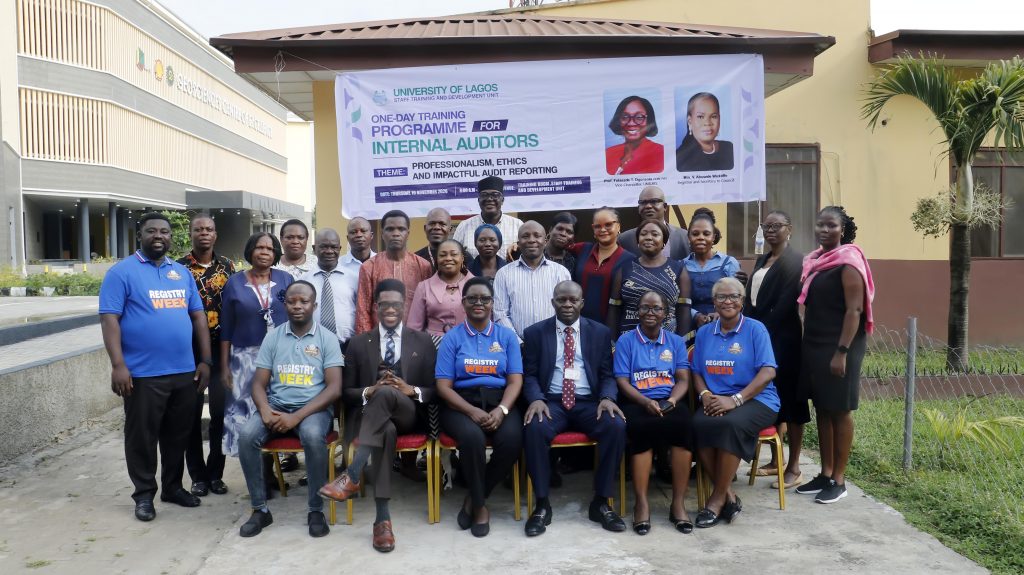
The one-day workshop, which was Thursday, November 19, 2026, was organised by the Staff Training and Development Unit (STDU, UNILAG) to equip internal auditors with contemporary knowledge, professional skills and technological competencies required to navigate the evolving demands of modern auditing.

Commitment to Transparency and Accountability
Speaking on behalf of the Vice-Chancellor, Professor Folasade Ogunsola, FAS, OON, the Director of ST&DU, Mrs Aderonke Asiwaju explain ed that the training was designed to reposition the University’s internal audit function through enhanced professional skills, ethical practices, contemporary auditing techniques and digital competencies.
According to her, the University must sustain a culture of transparency and accountability in its academic, procurement and financial operations while upholding global best practices.
She stressed that UNILAG’s institutional reputation must be continually strengthened through credible systems, effective internal controls and professional standards worthy of emulation, reiterating the University’s commitment to excellence as the University of First Choice and the Nation’s Pride.

Digital Auditing: From Data to Insight
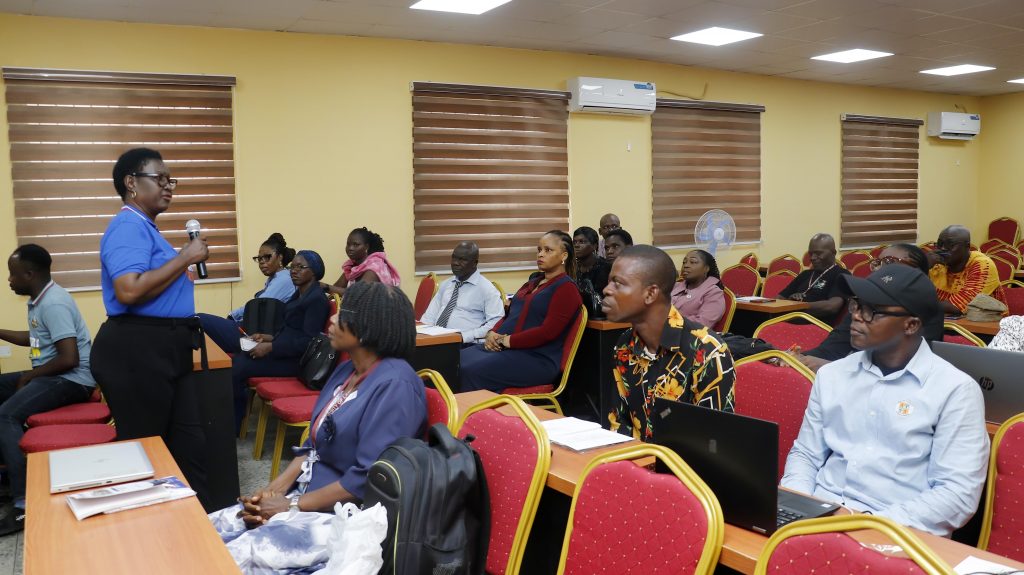
One of the resource person at the Workshop, Mr. Omotayo Mabunmi, in his presentation on “Digital Auditing and Data Analytics for Auditors”, emphasised the importance of leveraging technology, data and professional judgement to improve audit processes and decision-making. He described digital auditing as the purposeful use of data, systems, automation and analytics to plan, execute, document and continually improve audit work.

Noting that technology should enhance professional judgement rather than replace critical thinking and scepticism, Mabunmi urged auditors to understand the University’s data ecosystem, obtain relevant data dictionaries and agree on extraction parameters before conducting analyses.
He stressed the need to establish the reliability and suitability of data before testing, warning that analyses conducted on unreliable data could produce misleading conclusions.
Mabunmi encouraged auditors to distinguish traditional auditing from data-driven approaches and identify areas where testing entire data populations could provide greater value. He further underscored the importance of documenting audit findings and exceptions, noting that credible reports must clearly establish the criteria, observed conditions, underlying causes, consequences and practical recommendations.
Highlighting the application of data analytics in identifying irregularities, he cited duplicate bank accounts, payments to former employees and suspicious overrides or alterations in financial records as areas auditors could investigate through data analysis and audit trails.
He urged auditors to translate each data source into precise risk questions, appropriate testing rules and verifiable evidence trails, while promoting collaborative work, proper documentation and the use of accompanying analytical workbooks.
Forensic Auditing and Fraud Detection in the Digital Age
Another resource person who is a specialist in Financial Forensics and Criminal Intelligence, Dr. Damilola Fagboro, spoke on “Forensic Auditing and Fraud Detection Techniques”.
He highlighted the importance of financial forensics in safeguarding institutional resources and strengthening accountability in increasingly sophisticated organisational environments.
He explained that digital technology was transforming internal auditing by improving efficiency, accuracy and the capacity to analyse complex financial information.
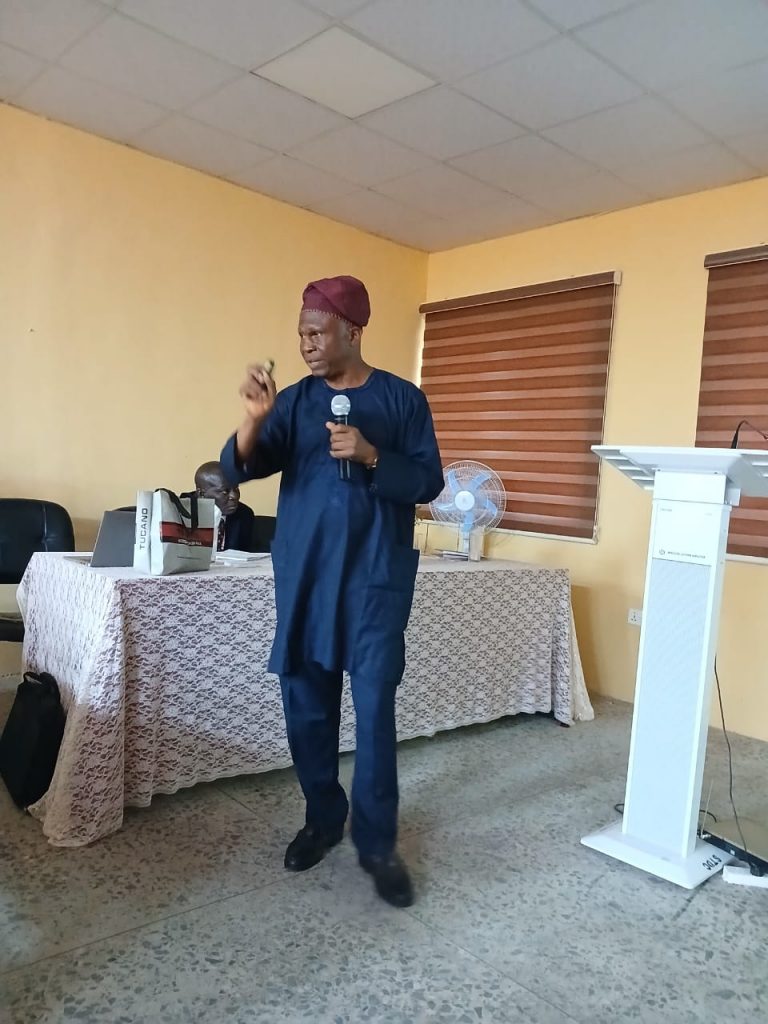
Identifying automation, artificial intelligence and data analytics, enhanced transparency, and risk management as key applications of technology in auditing, Fagboro said digital tools could automate routine tasks, facilitate the analysis of large datasets, improve risk assessment, reduce human error and enable auditors to respond more effectively to emerging threats.
He described internal auditing as an independent and objective evaluation of an organisation’s operations, controls and governance processes aimed at improving efficiency, managing risks and ensuring compliance.
According to him, internal auditors provide assurance and advisory services to management and governing bodies by identifying operational deficiencies, evaluating processes and recommending improvements, with the ultimate goal of strengthening an organisation’s capacity to create, protect and sustain value.
Defining fraud as deceptive conduct undertaken to secure undue advantage, Fagboro identified the essential elements of fraud as an unlawful act involving a breach of trust, identifiable victim or victims, perpetrator or perpetrators, and an item of commercial value.
He described fraud detection as a combination of conventional investigative methods, data analysis, technological innovations, artificial intelligence, behavioural monitoring and other investigative techniques deployed to identify and prevent fraudulent activities.
Fagboro advocated intelligence sharing, cooperation, whistleblowing, background investigations and proper evidence gathering as critical components of fraud prevention and detection.
He described evidence as information capable of establishing or disproving an allegation or suspected offence, stressing the need for strong security controls to protect institutional assets, public trust and the stability of organisational financial systems.
He further noted that internal auditing remained critical to organisational oversight, governance, risk management, operational efficiency and regulatory compliance, adding that fraud and deceptive practices undermine institutional integrity and reputation.
Ethics, Professional Communication and Quality Reporting
The Director of Audit, University of Ibadan, Dr Joseph O. Oluyori, who spoke on “Ethics, Professional Communication and Report Writing,” described internal auditing in a university as a strategic governance function that promotes accountability, transparency, prudent resource management, regulatory compliance, operational efficiency and the attainment of institutional objectives.
He affirmed that an auditor’s effectiveness depended not only on technical expertise and the ability to identify irregularities but also on ethical conduct, independence, professional communication and credible evidence.
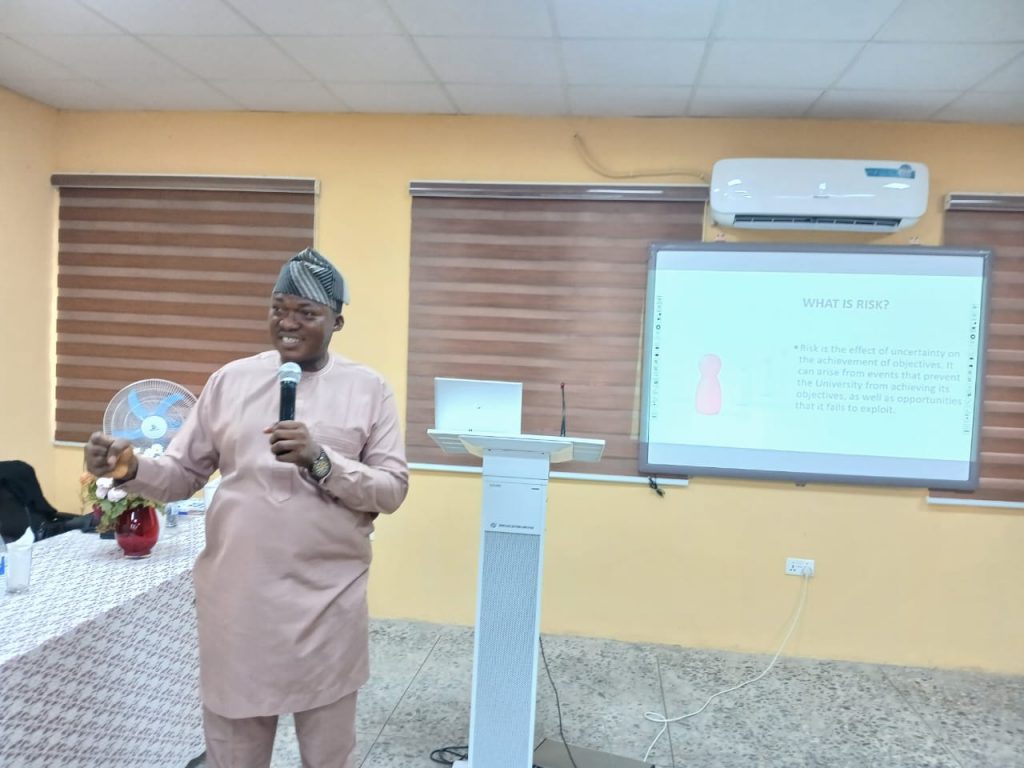
According to him, well-documented findings presented in concise, objective and persuasive reports could drive corrective action, recoveries, stronger internal controls and improved institutional performance.
Oluyori described ethics as the moral principles and professional standards guiding auditors’ conduct, including: integrity, objectivity, confidentiality and professional competence. “Audit work loses credibility and legitimacy when these principles are compromised”, he declared.
He identified loss of credibility, reputational damage, concealment of fraud and institutional losses as consequences of compromised integrity.
To navigate ethical dilemmas, he advised auditors to identify the issues, establish the facts, determine applicable requirements, evaluate alternatives, consult appropriately, act and review the outcome.
He also cautioned against common report-writing errors, including excessive jargon, personal attacks, unsubstantiated allegations, weak recommendations, poor proofreading and inaccurate representation of management’s position.
He emphasised that facts must be properly established before conclusions are drawn about financial losses, noting that fair, accurate and evidence-based reporting protects the credibility of the audit function.
Oluyori said modern internal auditors must demonstrate ethical conduct, courage in judgement, professionalism in communication, objectivity in reporting, constructive recommendations and a strategic commitment to adding value.
Risk-Based Auditing and Compliance for Effective Governance
In another presentation titled “Risk-Based Auditing and Compliance”, Oluyori described risk as the effect of uncertainty on the achievement of organisational objectives, noting that it could arise from events that hinder institutional goals or opportunities that an organisation fails to exploit.
He explained that risk-based auditing directs audit resources towards areas of greatest potential risk to organisational objectives, enabling internal auditors to assess whether identified risks were properly evaluated, effectively controlled and appropriately monitored.
Distinguishing compliance auditing from risk-based auditing, he noted that while compliance auditing determines whether established procedures and requirements were followed, risk-based auditing evaluates whether institutional objectives are adequately protected.
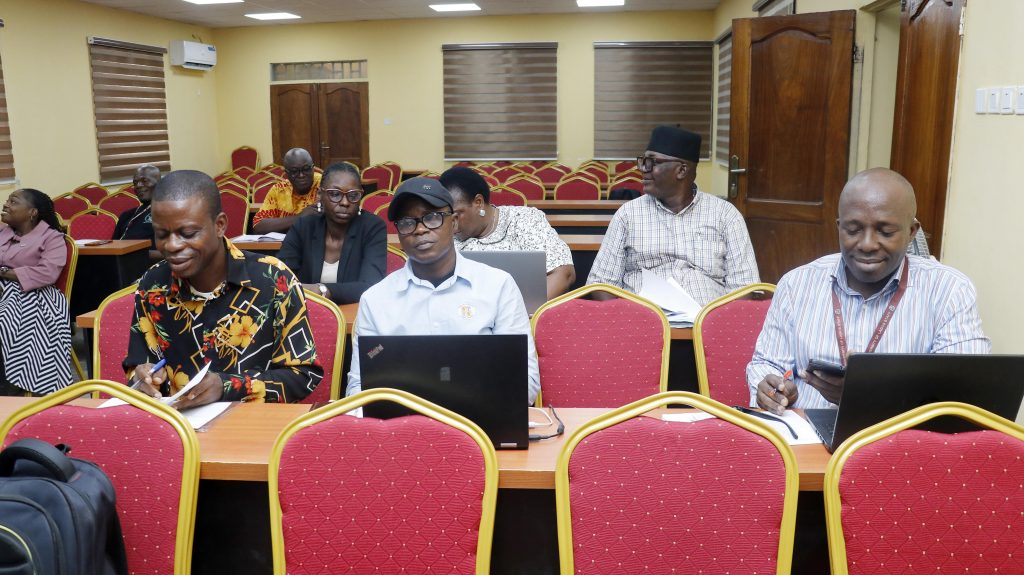

He described risk-based auditing as a cornerstone of effective governance in modern universities, stressing that aligning audit activities with institutional risks provides assurance beyond regulatory compliance to the achievement of strategic objectives.
According to him, effective risk-based auditing strengthens accountability, protects public resources, improves regulatory compliance, enhances institutional reputation and supports the delivery of quality university education in Nigeria.
Professional Development Key to Accountability and Good Governance
Ultimately, the workshop reaffirmed the importance of a competent, ethical and technology-driven audit function in promoting accountability, safeguarding institutional resources and strengthening governance.
It underscored the need for continuous professional development and proactive risk management in sustaining institutional integrity and excellence, values which the University of Lagos continues to uphold in its pursuit of administrative efficiency, transparency and global best practices.
Author: Afolabi Akinola
Photographer: Islamiat Akanni