Nigeria’s Foreign Policy will plays a vital role in achieving objectives of the Renewed Hope Agenda, as only effective engagement with international organizations and partners will guarantee access to leveraging global resources and support.

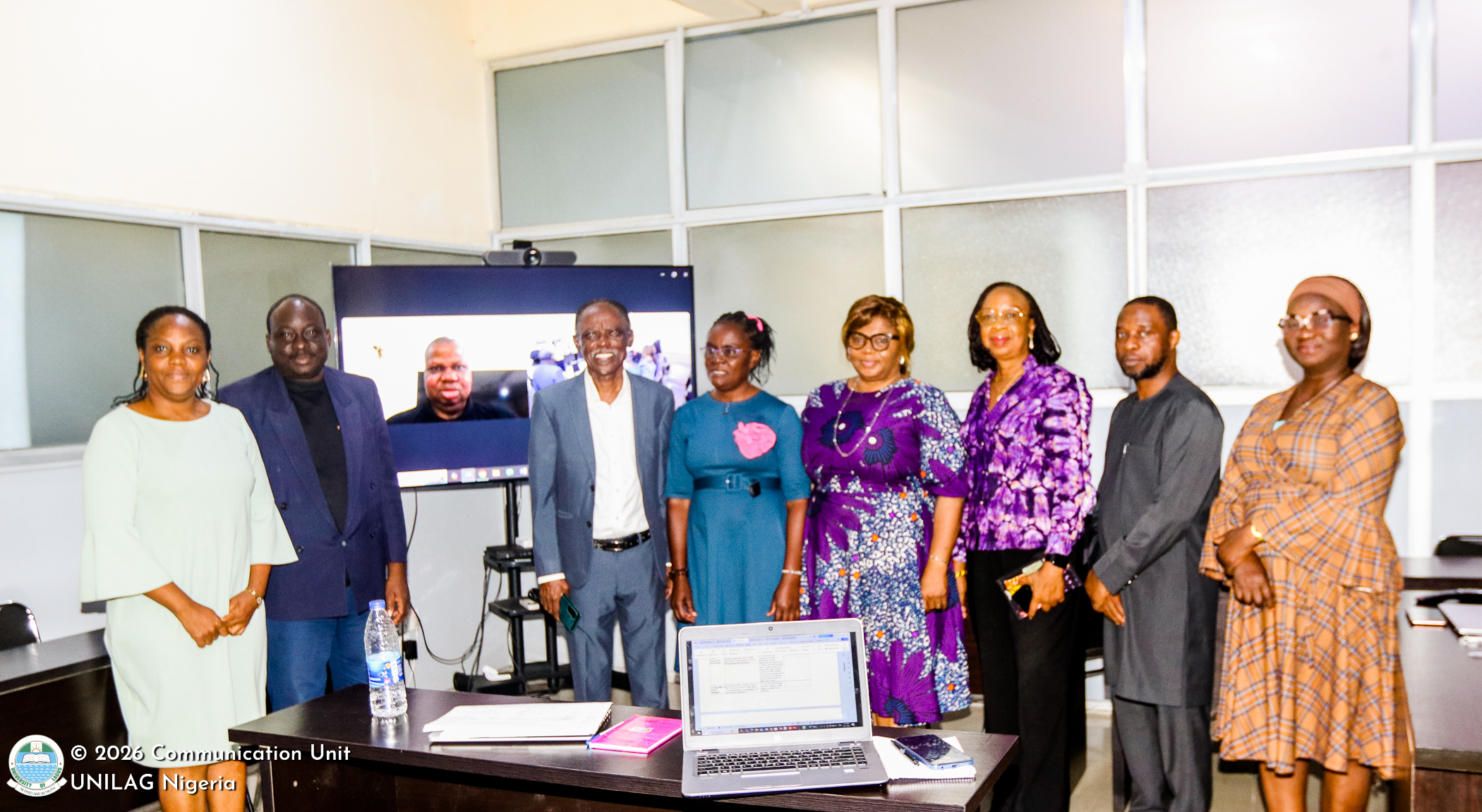
This was the submission made by the Consul-General of India in Lagos, Mr. Chandramouli Kumar Kern, at the Annual Lecture of the Masters of Diplomacy and Strategic Studies held at the Julius Berger Auditorium on Saturday, June 1, 2024.
Speaking on “India’s Rapid Growth: Strengthening Nigeria-India Ties for a Prosperous Future”, he articulated India’s point of view and what could be the synergy between Nigeria and his parent country in various aspects on international economic relations.
With the theme, “Setting Foreign Policy Content of the Renewed Hope Agenda”, the lecture drew a diverse audience of scholars, diplomats, policymakers, and students to the Julius Berger Hall of the institution where they were afforded an opportunity to foster a rich exchange of ideas and perspectives on the subject.
The seminar also featured question-and-answer sessions and concluded with a Call to Action, encouraging stakeholders to work together to implement the recommendations and strategies discussed during the event.

Leading the array of facilitators was a former Executive Director, Centre for Advanced Social Science (CASS), Port-Harcourt, and a well-known Political Scientist, Professor Adele Jinadu, whose presentation examined the implication of the leadership imbroglio on democratic process in Nigeria. According to him, “the Nigerian state is confronted with socio-political instability, high degree of corruption, mass hostility to the public and poor macroeconomic management, which will jeopardize Nigeria’s foreign policy interests”.
The revered Diplomat interrogated in particular, the leadership genres of both the civilian and military administrations, and expressed displeasure on the state of Nigeria security architecture; which has remained“a spectre of horror”, thus making Nigeria an enabler of everything that is shameful in the comity of nations. He, however, encouraged the expertise of those in the Academia in supporting the government to leverage resources to move the Nigerian state forward.

Reviewing the Afro-Centric foreign policy focus of the Renewed Hope Agenda, an International Relations expert and Historian, Professor AbayomiAkinyeye, defined “Foreign Policy as a totality of action pursued or intended to be pursued and how the government of a country intends to pursue this action in relation to the protection of national interest.”
Professor Akinyeye posited that there has been a recurrent and sustained argument that the Nigerian state, like its counterparts in Africa and other developing countries, underperforms due to lack of state capacity to deal with the contemporary complexities of governance.
While he commended the current administration’s commitment to Afro-Centricism, the former Dean of Arts at the University of Lagos raised critical questions about its implementation and emphasized the need for a more nuanced understanding of the subject, moving beyond rhetoric to concrete actions that prioritize African interest.
On his part, Director of the Institute of African and Diaspora Studies, Professor Muyiwa Falaiye expressed dissatisfaction with governance and political leadership in Nigeria which he opined have been driven by self-interest and other primordial considerations, which take priority over the public interest.

With his delivery on the topic, “Multilateral Relations Elements in the Foreign Policy Component of the Renewed Hope Agenda”, he highlighted Nigerian state as an artificial creation with several theories of how it emerged.
According to him, “whether it is by social contract theory or whatever theories that dates back to the state, what is clear is that foreign policy is as old as the emergence of civil society”.
He noted that there are usually two main purposes for such engagement: First, to consider the state as a means to an end; while the other perspective is that the State is an end in itself, i.e. the individuals exist to serve the State.
The Professor of African Socio-Political Philosophy asserted that history of human beings is a conflict between these dual purposes of the state which apply to foreign policy. He expertly analysed the multilateral relations element in the Foreign Policy component of the Renewed Hope Agenda, stating that nations, states, and civil society will have to engage one another.

Earlier, the Keynote Speaker and Dean, School of Postgraduate Studies, Professor Abraham Osinubi, had welcomed participants and underscored the programme’s theme as a crucial step to fostering a closer relationship between the Academia and Government.
According to the medical practitioner, with the complexity of Nigeria’s political landscape, there is a need for the Nigerian issue to be interrogated by the Academia as it enhances participant knowledge as well as empower them to be able to address national and global issues effectively.

Similarly, the Dean of Arts, Professor Akanbi Ilupeju underscored the importance of the program. He assured of the continued support of the Faculty to engagement that will add to the body of knowledge and national development.
The Masters of Diplomacy and Strategic Studies commenced as a postgraduate program in the Department of History and Strategic Studies in the 2009/2010 Academic Session.